
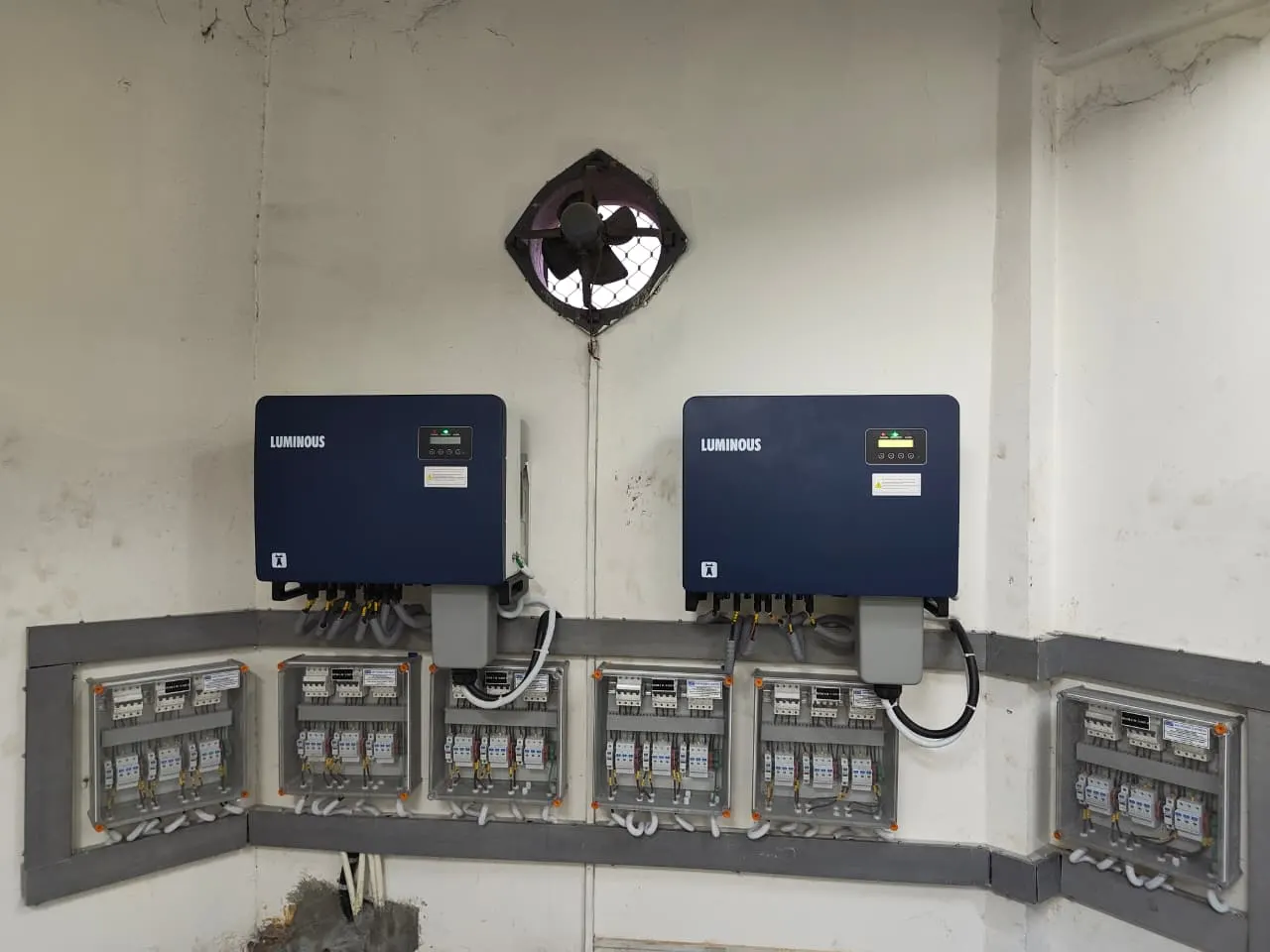
Battery Energy Storage (BESS)
Peak shaving & demand optimization, critical power backup, microgrid integration.
What this is
A battery moves energy through time. Solar decides how much you generate; storage decides when you use it.
That single sentence hides two quite different jobs. Peak shaving cuts the maximum demand a site draws from the grid, which is what a demand charge is billed against — it is sized in kilowatts, and in how long the peak lasts. Backup carries a site through an outage, and is sized in kilowatt-hours against the load that genuinely cannot stop. A system built well for one is usually the wrong size for the other, which is why the load profile comes before the product selection.
Where it fits
- Sites where demand charges are a large share of the bill
- Operations where an outage has a measurable cost — a cold chain, a batch process, a data room
- Rooftop systems exporting midday surplus at a credit well below the import tariff
- Sites running diesel for evening load, where fuel and maintenance are the real cost
What the work involves
- Interval load-profile analysis to separate the peak-shaving case from the backup case
- Capacity, C-rate and depth-of-discharge selection against that profile
- AC-coupled or DC-coupled topology, and the PCS or hybrid inverter that follows from it
- Battery management, protection coordination and safety interlocks
- Thermal management and enclosure or room design
- Commissioning, control-strategy tuning and performance verification
Want a number to work with?
The calculator gives a preliminary size, saving and payback in about a minute.
Open the calculatorWorth knowing
Chemistry is a commercial decision as much as a technical one
Lithium iron phosphate trades energy density for cycle life and thermal tolerance; nickel-manganese-cobalt does the reverse. For a stationary system where floor area is rarely the constraint, cycle life and safety usually matter more than density. Warranties in this category are written in cycles and throughput rather than years, so two quotes are only comparable once both are converted to the same basis.
Round-trip efficiency is a real cost
Every unit stored is a unit lost to conversion and to the battery itself before it is used. Any saving projection that ignores round-trip losses overstates the case, which is why the sizing here works from usable energy rather than nameplate.
How every project runs
One accountable team from the first site visit to the maintenance years afterwards. Nothing is handed to a subcontractor at the seams.
- 01
Plan
- Energy Assessment
- Detailed Engineering
- Structural Design
- 02
Build
- Procurement
- Construction & QA
- 03
Energise & sustain
- Grid Connectivity
- Commissioning
- Long-Term O&M